


Nerve Pain, Joint Pain, or Muscle Pain? How Doctors Tell the Difference
Pain is considered one of the most common reasons for which people seek medical care. Regardless of whether it begins as a dull ache in the back, stiffness in the knee, or as a burning pain that runs down the leg, pain is an important factor that impacts the way people carry on their day-to-day activities.
As per the Centers for Disease Control and Prevention (CDC), it has been revealed that almost one out of every four adults in the United States of America experiences chronic pain. A considerable percentage of them have also mentioned that the pain they experience is of severe nature and impacts their day-to-day activities in an adverse way.
Despite the fact that the types of pain mentioned above may be similar to one another, medical experts consider them to be of three major types.
Nerve pain, Joint pain, and Muscle pain are the three types of pain that have been considered by medical experts.
Why Identifying the Type of Pain Matters
Pain is a way that the body indicates that something is wrong. The cause of pain is a major determinant of the kind of treatment that is necessary. For instance, a muscle strain may require rest and physical therapy, while nerve damage may require medication that targets nerve signals.
According to the National Institutes of Health (NIH), pain results from injury, inflammation, or nervous system dysfunction. Since some of these pains may manifest similar symptoms, it is important for a doctor to carefully examine a patient’s case before making a decision
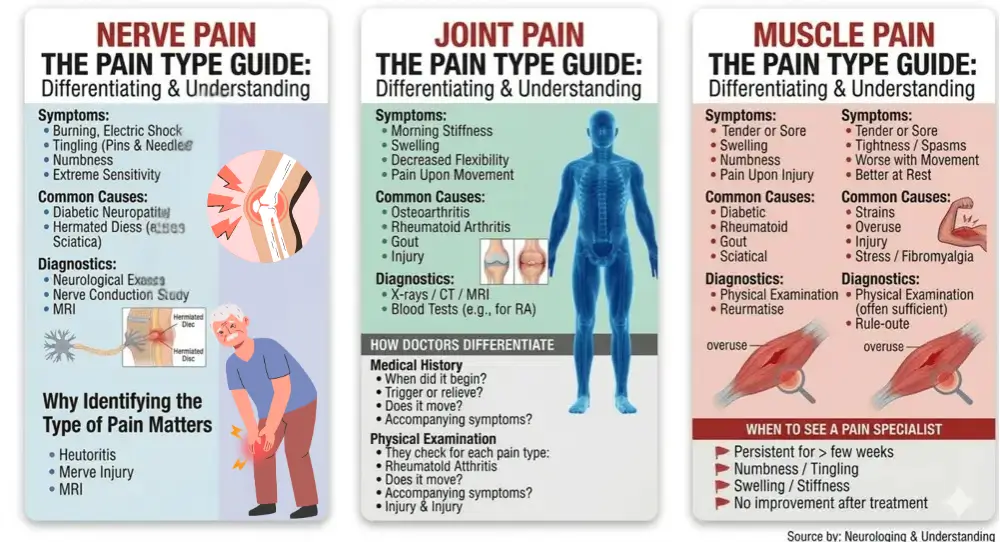
Nerve Pain: When the Nervous System is Involved
Nerve pain, also called neuropathic pain, is the type of pain that occurs due to the malfunctioning of the nerves. Nerve pain is the type of pain that directly impacts the nervous system. The nervous system consists of the brain, spinal cord, and nerves.
The symptoms of nerve pain that patients complain about include:
- Burning and electric shock-like sensations
- Tingling or “pins and needles”
- Numbness
- Extreme sensitivity to the touch of anything
Unlike other pains that occur due to injury and subside once the injury heals, nerve pain persists even after the injury heals.
According to the National Institute of Neurological Disorders and Stroke (NINDS), nerve pain occurs because of the malfunctioning of the nerves.
Common causes of nerve pain:
- Diabetic neuropathy
- Herniated discs or compression of the spine
- Sciatica
- Shingles
- Traumatic nerve injuries
Physicians diagnose nerve pain through neurological examinations, MRI scans of the nerves, and nerve conduction studies that measure the electrical activity of the nerves.
Joint Pain: Problems within Bones and Cartilage
Pain related to joints occurs within areas where two or more bones meet, such as knees, hips, shoulders, and fingers. Joint pain is most commonly related to inflammation or degeneration within the affected area.
Common symptoms of joint pain:
- Morning stiffness
- Swelling
- Decreased flexibility
- Increased pain upon movement
Joint pain is often related to:
- Injury to ligaments or cartilage
Joint disorders are a major cause of disability worldwide. Joint disorders often result from gradual development over time, which is caused by aging or stress.
Imaging studies such as X-rays, CT scans, or MRI scans are conducted by a physician to diagnose joint pain. Blood tests are also conducted to diagnose rheumatoid arthritis.
Muscle Pain: Strains, Overuse, and Injury
Myalgia is a medical term for muscle pain. Most muscle pain is caused by strains, overuse, or minor injury. In most cases, muscle pain is localized to a particular area of the body.
Common symptoms of muscle pain:
- The affected muscle is tender or sore
- The muscle is tight or has spasms
- The muscle pain gets worse when moving
- The muscle pain gets better when at rest
Muscle pain is one of the most common musculoskeletal pains. In most cases, muscle pain disappears within a few weeks or days.
However, if muscle pain persists, it could be a symptom of fibromyalgia, infections, or long term stress.
How Doctors Differentiate Between These Types of Pain
The symptoms associated with these types of pain can be similar, and thus, doctors have developed a systematic approach in determining the cause of pain.
Medical History
The first step in diagnosing the cause of pain is talking to the patient about their symptoms.
For example, doctors often inquire about:
- When did the pain begin?
- What triggers or relieves the pain?
- Does the pain move from one place to another?
- Are there accompanying symptoms, like numbness and swelling?
The manner in which patients describe their pain can give doctors an important clue about the cause of pain.
Physical Examination
The physical examination enables doctors to assess the affected areas.
For example:
- Nerve pain can result in abnormal reflexes and decreased sensitivity.
- Pain in the joints can result in swelling and limited movement.
- Muscle pain can result in tenderness.
Diagnostic Tests
Doctors may also advise further tests, such as:
- X-rays and/or MRI scans to check the bones, joints, and soft tissue
- Nerve conduction tests to check for nerve damage
- Blood tests to detect inflammation and autoimmune disease
These tests will help doctors confirm the diagnosis and determine the best treatment.
When to See a Pain Specialist
It is common to experience occasional aches and pains. However, chronic pain is not something to be taken lightly. It may interfere with sleep and work.
It is necessary to seek the services of a pain specialist when experiencing any of the following:
- Pain that persists for more than a few weeks
- Numbness or tingling in the legs and arms
- Swelling and stiffness in the joints
- When the pain does not go away after treatment
It is crucial to seek early intervention to avoid future complications.
Conclusion
Nerve pain, joint pain, and muscle pain may appear similar at first glance, but they have different causes in the body. Therefore, they need different treatment methods. Doctors use various methods of investigation to find the cause of the pain and develop a plan of treatment accordingly.
If the pain does not go away or starts affecting normal life, it is essential to get professional help in finding a solution.
If you are experiencing persistent nerve, joint, or muscle pain, seeking professional evaluation is an important step toward relief. The specialists at Family First Healthcare Pain Management offer treatment plans designed to identify the root cause of pain and help patients regain comfort and mobility.
Sources
- Centers for Disease Control and Prevention (CDC)
Chronic Pain Among Adults in the United States
https://www.cdc.gov/nchs/products/databriefs/db518.htm - National Institute of Neurological Disorders and Stroke (NINDS)
Pain Information Page
https://www.ninds.nih.gov/health-information/disorders/pain - National Institutes of Health (NIH)
Understanding Pain and Its Causes
https://www.nih.gov - U.S. National Library of Medicine – MedlinePlus
Joint Pain and Muscle Pain Overview
https://medlineplus.gov - Cleveland Clinic
https://my.clevelandclinic.org/ - Mayo Clinic
https://mayoclinic.org/