

5 Posture Improvements to Help Ease Back & Neck Pain
Many individuals deal with neck stiffness, back pain, or headaches that keep returning no matter how much they rest or stretch. These issues often come from everyday habits like long hours at a desk, poor sitting posture, or constant phone use.Over time, these problems may require structured chronic pain management to fully resolve.
The Modern Posture Challenge
Today’s routine often makes it hard for the body to stay in a healthy position. Long hours at computers, long travel sits, and constant use of phones push the spine into positions it isn’t meant to hold for long.
These habits eventually build tension in the neck and shoulders, more pressure in the lower back, and a general feeling of tightness throughout the day. If left unaddressed, this can lead to conditions that may need professional spine care.
How Poor Posture Leads to Pain
The neck can feel tight from keeping the head forward, the upper back may strain from rounded shoulders, and the lower back bears extra pressure when sitting too long.
They grow slowly, with symptoms involving stiffness, fatigue, and a heavy feeling in the back. For many, this becomes recurring pain, headaches, or the sense that the body is working harder than it should. In some cases, untreated posture issues may contribute to conditions like herniated discs and spinal stenosis.
Posture Improvements That Can Help Reduce Neck and Back Pain
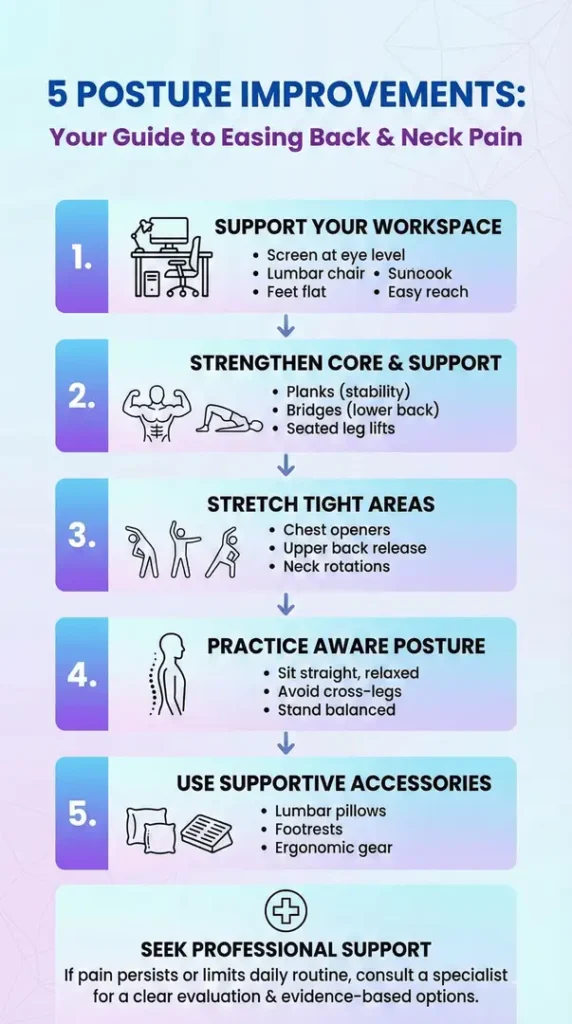
1. Support Your Workspace Setup
Aligning your workspace reduces strain and keeps your spine in a healthier position.- Keep your screen at eye level to avoid leaning forward
- Use a chair that supports the lower back
- Rest both feet flat on the floor
- Place frequently used items within easy reach
2. Strengthen Core and Support Muscles
A stronger core helps the body stay upright without overworking the back or neck.- Planks for overall stability
- Bridges for lower back and glute strength
- Seated leg lifts to build abdominal support
3. Stretch Tight Areas Regularly
Gentle stretching counters stiffness from long hours of sitting or repetitive movements.- Chest stretches to ease rounded shoulders
- Upper back stretches to reduce tension between the shoulder blades
- Neck rotations and side stretches to release strain
4. Practice Aware and Balanced Posture
Small daily reminders help your body maintain better alignment.- Sit with relaxed shoulders and a straight back
- Avoid sitting cross-legged for long durations
- Stand with weight balanced on both feet and chin parallel to the floor
5. Use Supportive Accessories When Needed
The right tools make healthy posture easier to maintain.- Lumbar pillows to support the natural curve of the lower back
- Footrests to keep legs at the right angle
- Ergonomic chairs or adjustable desks to prevent prolonged strain
When to Seek Professional Support
If pain is beginning to limit your daily routine, a clear evaluation can help you understand what is going on and what options may bring relief.
Our team focuses on safe, evidence-based treatments that fit your needs, so you can get back to living with more confidence and comfort You can also explore treatment options for related conditions like arthritis and joint pain or nerve-related issues such as neuropathy.